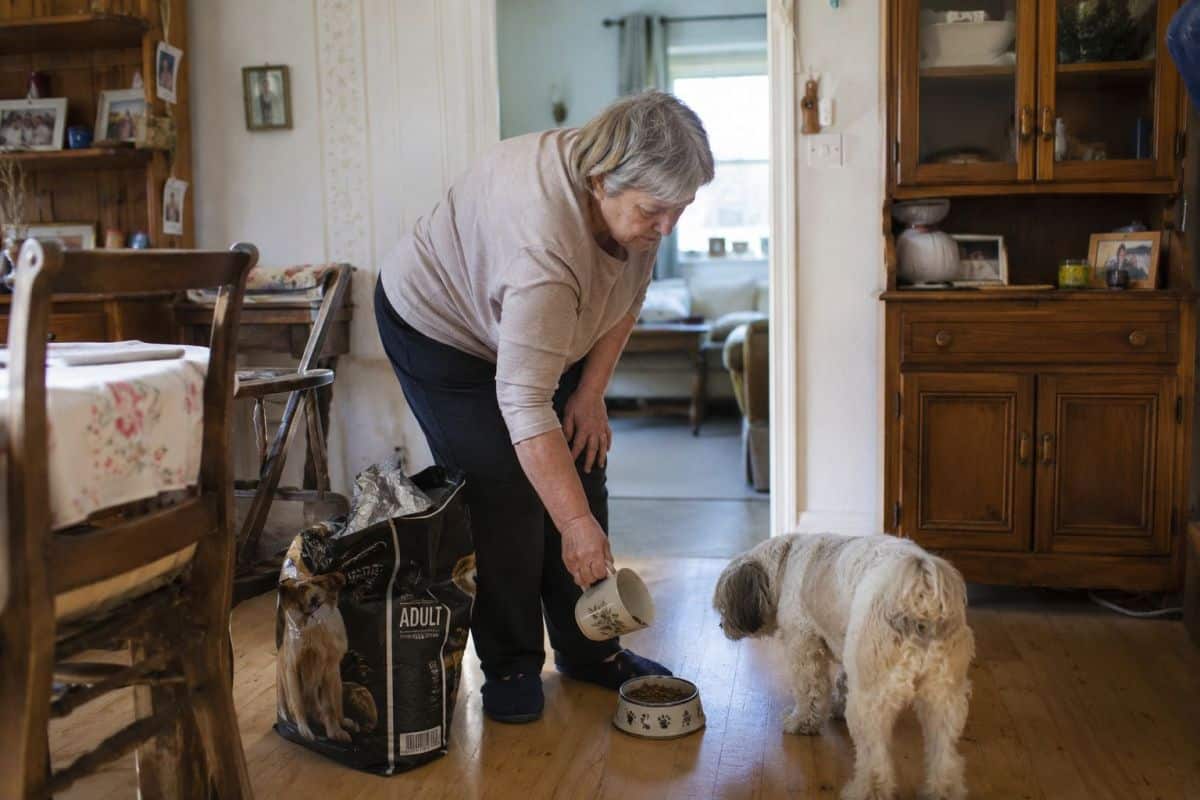
When something happens to an older parent, our attention naturally goes straight to them.
Are they safe? Where have they been taken? Can somebody reach them? Do they have their phone, identification, and medication? Those are obviously the right questions.
But back at home, a dog may be waiting beside the door. A cat may be hiding under the bed. A bird may need food. The animal does not understand why the routine has suddenly stopped. It only knows that its person has not come home.
For an older person living alone with pets, this is one of those small practical things that can suddenly become very important.
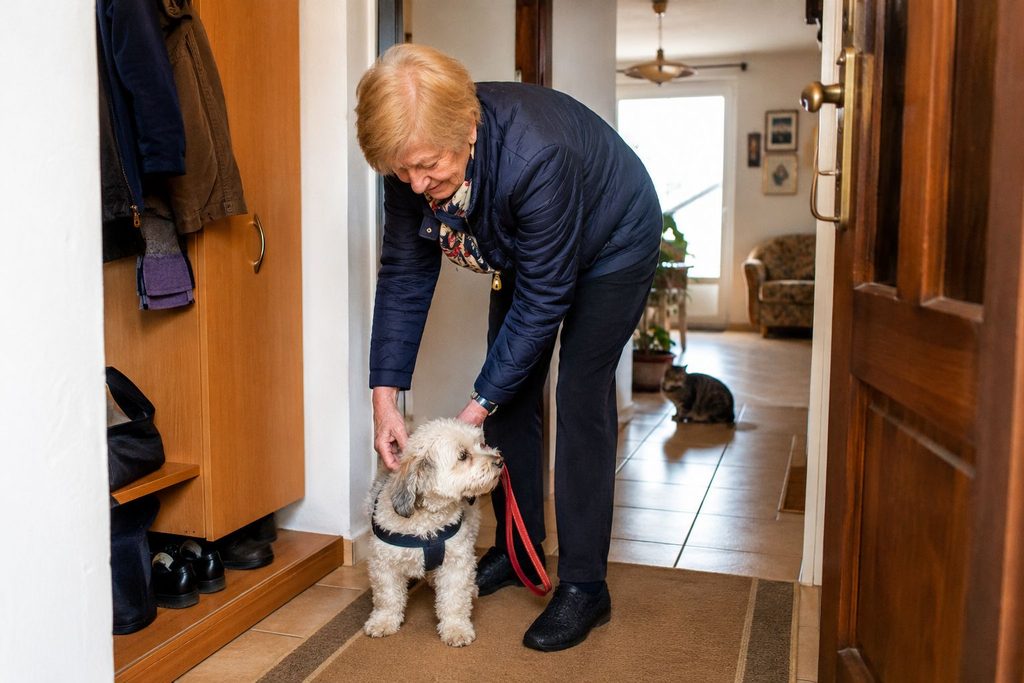
Emergencies rarely happen smoothly
We like to imagine that, if a parent ever needed to go to the hospital, there would be time to organize everything. They would call us, explain what happened, say where the spare key is, and remind somebody to feed the pet. Sometimes that is exactly what happens.
Sometimes it isn’t. A parent may fall and be unable to reach the phone. They may go to the hospital expecting to return a few hours later and then be admitted overnight. Their family may live in another city or another country.
Suddenly, very ordinary details matter: Who can get into the house? Who knows there are pets inside? Does anything need doing immediately?
These questions are much easier to answer when you have planned ahead, before someone is standing outside a locked door trying to work everything out.
 Download easy to use free printables from our Resources page: Pet Care and others.
A simple plan is usually enough
There is no need for an elaborate emergency manual. What matters is that at least two people know that pets live in the home, and that someone nearby has an agreed way of getting inside if necessary.
It is worth checking those arrangements from time to time too. Does the spare key still work? Is the person who has it still willing and able to help when needed?
Then write down the basic pet-care information someone unfamiliar with the household would need. When you live with animals, their routines become so familiar that you barely notice how much you know.
In our home, we know which of our cats comes running the moment food appears and which one prefers to watch from a safe distance and needs to be brought to the bowl. We know where our small dog’s leash is kept, when she usually wants to go outside, and how she likes to play. We know which food, snacks, and bowls belong to each animal. We also recognize the small changes in their behavior that tell us when something may be wrong.
None of that feels like important information. It is simply everyday life. But someone entering our home unexpectedly would not know any of it.
A short note can solve that: what each pet eats and when; whether they need walks, litter box cleaning, or other daily care; any medication they take; where food, leashes, carriers, and other supplies are kept; which veterinary clinic they use; anything else that really matters, such as a cat that hides, a dog that should never be let off the leash, or an animal that is nervous around strangers.
The goal is not to explain the pet’s whole life. It is simply to help another person manage the first day without guessing.
Make sure every animal is accounted for
One surprisingly useful question is: How many animals should be here?
A dog will usually announce its presence. Cats can make things considerably more complicated. A frightened cat may stay completely silent under a bed, behind furniture, or inside a wardrobe when an unfamiliar person enters the house. Some may also try to escape through an open door.
Birds, rabbits, and other small animals may be in rooms a visitor would not normally enter. Fish are easy to overlook because they do not need immediate handling.
Names, short descriptions, and a few photos can help when there are several pets. The person checking the home should leave knowing that every animal has been found and is safe.
What if the parent cannot come home tomorrow?
The first visit may be simple: find the pets, give them food and water, take the dog outside, clean the litter box, and make sure the home is secure.
The bigger question comes later: What happens if the parent is still in the hospital two or three days from now? Someone may need to keep visiting, buy food or litter, clean cages, or arrange somewhere else for the pet to stay.
This is where having one main person and one backup becomes useful. It also helps to decide in advance who could take over for several days if necessary — perhaps a relative, neighbor, pet sitter, or boarding service.
The parent should be involved in that decision. They know their animals best, and making those choices together is much easier than making them during a crisis.
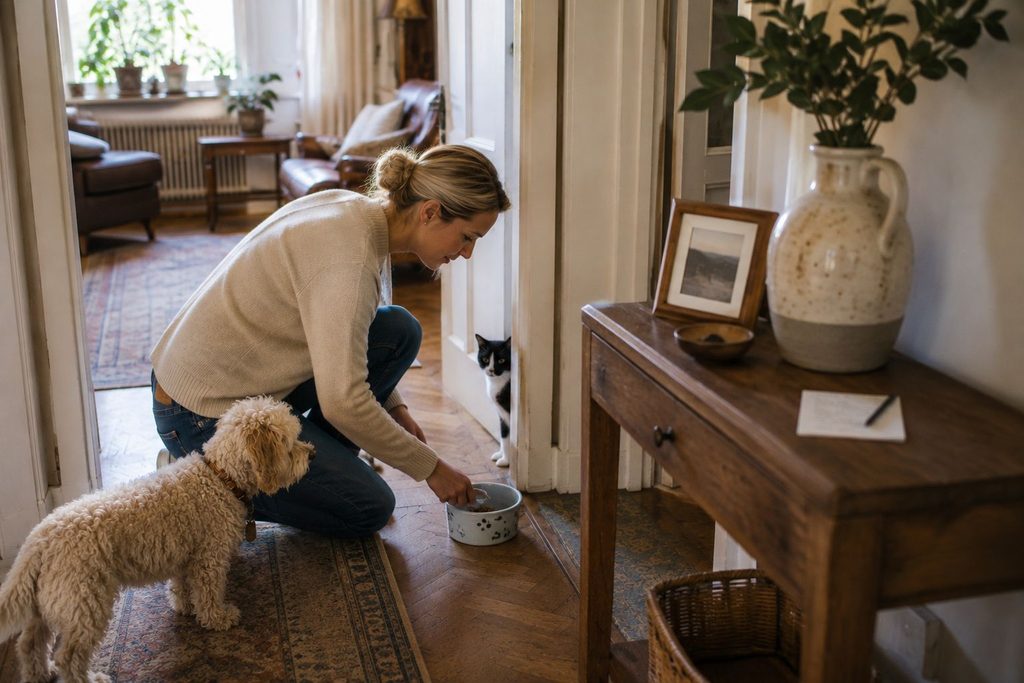
Knowing the pets are safe may help the parent too
For some older people, worrying about their animals can become one more reason to resist going to the hospital or to hurry home before they are ready.
If you live alone with animals who depend on you, suddenly leaving home can feel like leaving someone behind who has no idea what is happening.
A simple message can remove a lot of that worry.
- “The cats have been fed.”
- “Ioana took the dog for a walk.”
- “Everyone is fine.”
And a photo says even more.
Keep the conversation ordinary
Talking about emergencies can easily sound more dramatic than intended. So “If something happens to you, who takes the dog?” may not be the best opening.
The same plan can come from much more ordinary questions.
- “If you ever had to stay in the hospital overnight, who would you want to feed the cats?”
- “Who nearby would you trust with a spare key?”
- “Which vet should we call if we couldn’t reach you?”
- “Where should we keep the pet instructions?”
That is really all this is: making sure someone knows what to do.
Download easy to use free printables from our Resources page: Pet Care and others.
Where Parents are OK fits in
Parents are OK does not monitor pets. It cannot tell whether the dog has been walked or whether the cat’s water bowl is empty.
Its role comes earlier, by helping families notice when something may be unusual.
Parents are OK can help families notice when an older parent’s usual phone activity or day-to-day activity pattern changes. That may prompt a phone call, a visit, or contacting somebody nearby.
And if pets are waiting at home, having a simple plan already in place means that person also knows what to do for them.
Parents are OK cannot replace those arrangements. It can help the family realize sooner that it may be time to use them.
One page may be enough
A single page can cover most of what someone would need:
- names and photos of the pets;
- food, feeding routines, and snacks;
- health and medication instructions;
- walks, litter, cages, or other daily care;
- where food, leashes, carriers, and supplies are kept;
- two people who can help;
- veterinary contact details;
- anything important about behavior, handling, or hiding places;
- what should happen if the parent is away for several days.
Keep a copy somewhere easy to find in the parent’s home and give another to the person most likely to help in an emergency. It is a small amount of preparation for something that may never happen. But if it does, nobody has to start from zero.
If your parent could not come home tonight, would the people helping them know who was still waiting there?
Take care, talk soon,
Ioana

My guiding question every day is: ”How can I make this better?” I have a creative mind, an eye for all things beautiful, and a drive to bring people together. With a background in non-formal education, psychology, entrepreneurship, and interior design, I believe there is always a new opportunity around the corner. Life is interesting. Enjoy and make the most of it!