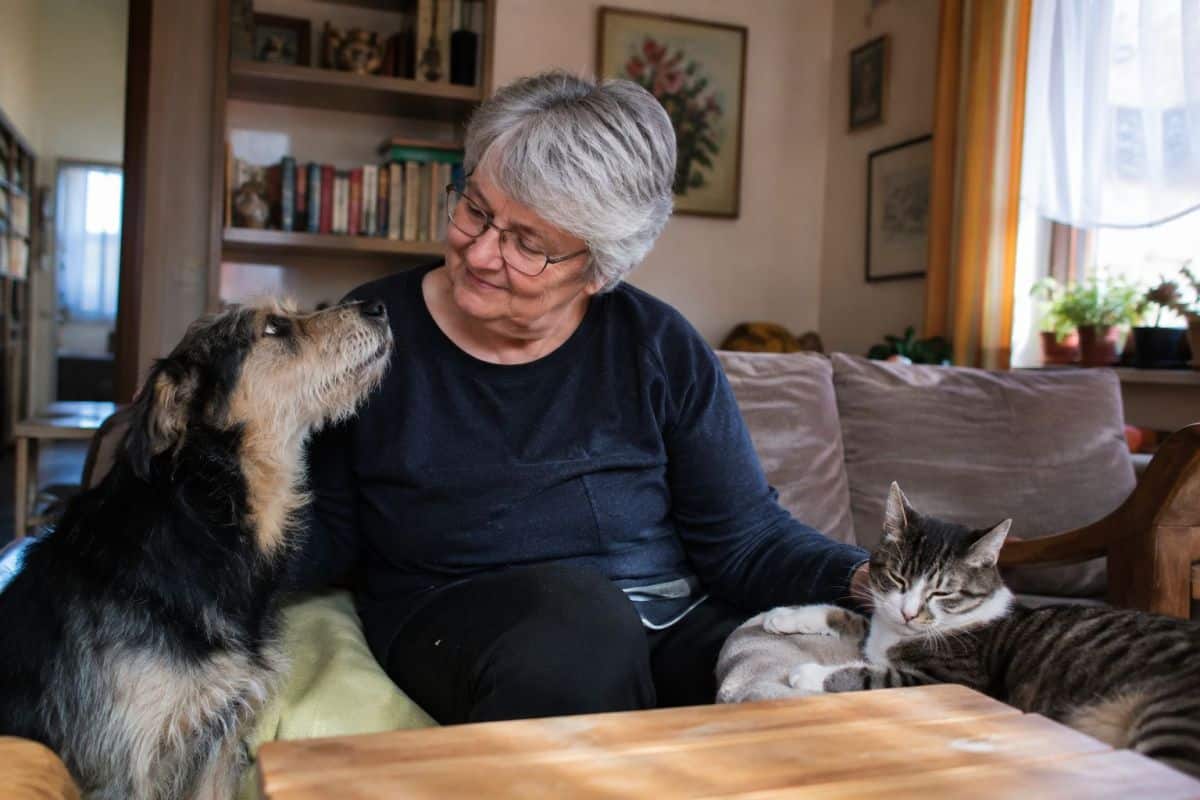
I grew up around animals. During the summers, I spent a lot of time with my extended family in rural areas, where feeding animals, cleaning after them and checking that they were safe was simply part of everyday life. Those experiences stayed with me.
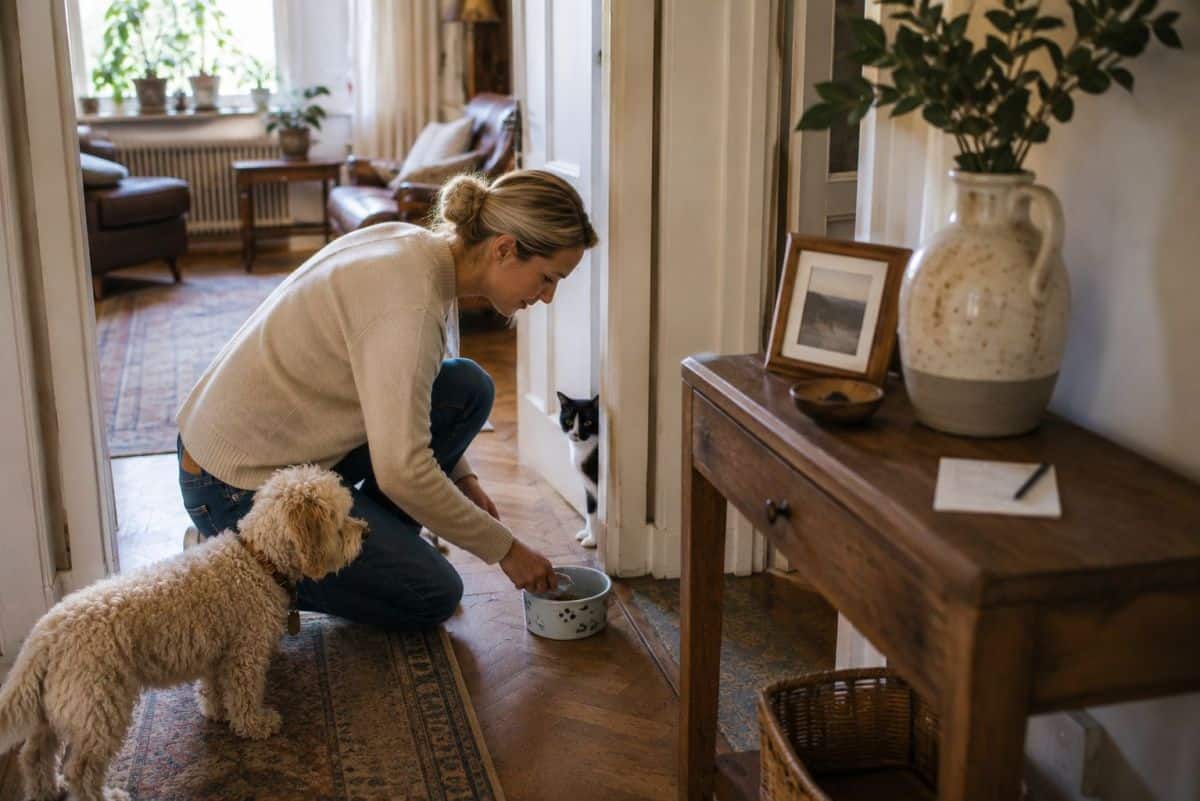
Today, we have two cats and a small dog of our own, and living with them is a constant reminder that caring for a pet is mostly made up of small, ordinary but daily tasks. Filling the bowls. Cleaning the litter tray. Going for a walk. Buying food. Remembering an appointment.
None of these things seems particularly difficult on its own.
But they happen every day. And as our parents get older, some of them may slowly become harder. The difficult part for families is knowing when an occasional forgotten task is just that — an occasional forgotten task — and when the pet-care routine is beginning to need a little support.
It usually starts with small changes
Pet care rarely becomes difficult overnight.
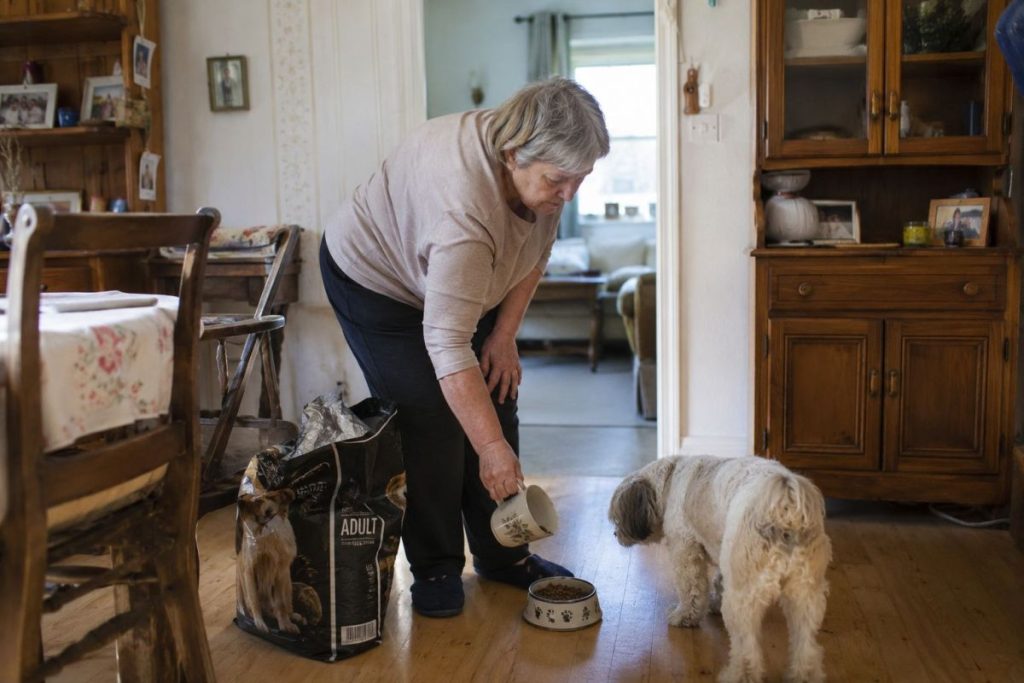
An aging parent may still walk the dog every day, but the walks become shorter. They may still clean the litter tray, but not quite as often. They may forget to buy food until the bag is almost completely empty. Perhaps they miss a veterinary appointment or cannot remember whether the cat has already been fed.
None of these things on its own means that something is seriously wrong. We all forget things. We all occasionally postpone chores. What matters more is whether some pattern has changed.
- Was your parent always relaxed about cleaning the bird cage, or did they once clean it regularly and now seem to struggle with it?
- Has the dog always had short walks, or are the walks getting shorter because your parent no longer feels steady outside?
- Does the cat sometimes beg for a second dinner, or is it regularly being fed double meals because nobody remembers whether it has eaten?
Patterns tell us much more than isolated mistakes.
 Download easy to use free printables from our Resources page: Pet Care and others.
Sometimes the problem is physical, not memory
It is easy to see an empty bowl or dirty litter tray and think: “They forgot!“.
But sometimes something else could be happening. Perhaps the bag of cat litter has become too heavy. Perhaps bending down to fill a water bowl hurts. Maybe opening tins is difficult, holding a dog on a lead feels less safe, or carrying a pet carrier to the vet has become exhausting.
These are very different problems and, fortunately, many of them have simple solutions.
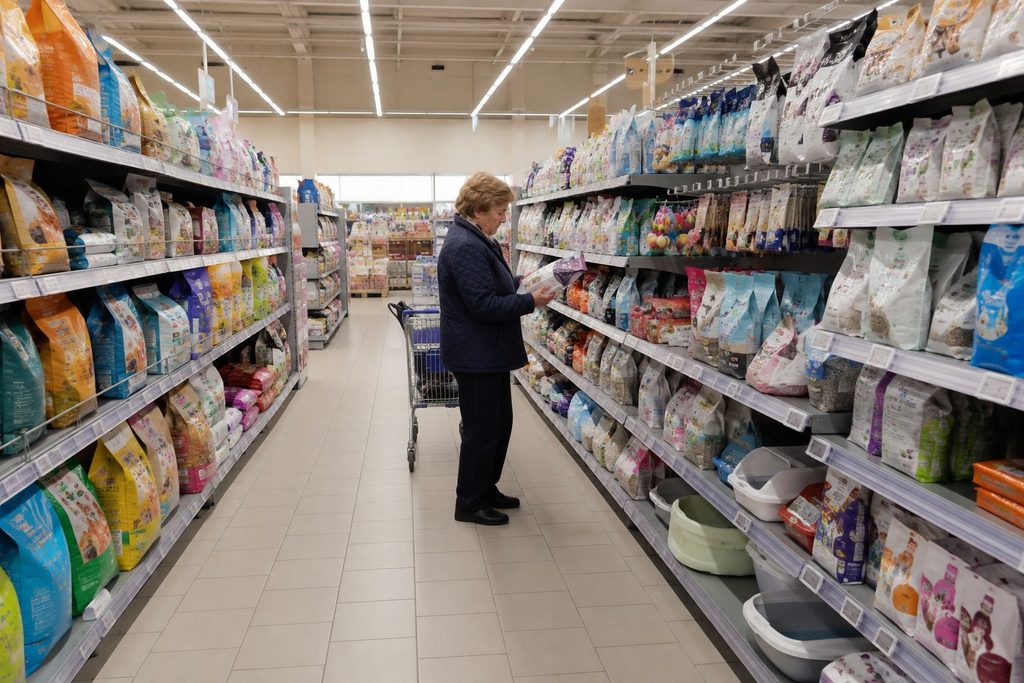
Smaller bags of food can be ordered online and delivered more often. Someone else can clean the litter tray. A neighbor can take the dog for a longer walk. Veterinary appointments can be booked by a family member.
Sometimes changing one small part of the routine is enough. This is important because difficulty with one task does not automatically mean that a parent can no longer look after their pet. It may simply mean they should not have to do every part of the job alone anymore.
The pet may show you that something has changed
Sometimes the animal gives us clues before the aging parent does. A dog that is getting fewer walks may become restless, gain weight or start having accidents indoors. A cat being fed too much or improper food might gain weight or get sick.
Of course, changes in an animal’s behavior can also mean that the animal itself is unwell. They should not be treated as an indicator that something is wrong with the parent. But they can be a reason to look a little closer.
If both the parent’s routine and the pet’s routine seem to be changing at the same time, it is worth asking why.
Different animals create different challenges
Dogs often make problems easier to notice because they need to go outside.
If walking becomes difficult, the effect appears fairly quickly. The dog may receive less exercise, while the parent may start avoiding bad weather, darkness or longer walks because they are worried about falling.
Cats can hide problems for longer.
They do not need walks and may spend much of the day quietly sleeping, so everything can appear perfectly normal even when feeding, litter cleaning or medication has become less consistent.
Birds, rabbits, hamsters and fish can be even easier to overlook.
Their routines may seem simpler, but they often rely completely on someone noticing small things: an empty water bottle, a cage that needs cleaning, an aquarium filter that has stopped working.
This is why families should know more than simply, “Mum has two cats,” or “Dad has some birds.”
It helps to know what the animals eat, whether they take medication, where supplies are kept and what would need to happen if the parent suddenly could not care for them for a few days.
Veterinary care can become complicated
Going to the vet is another area where problems may appear gradually. The appointment itself might not be the problem, but getting there may be.
Perhaps your parent no longer drives. Perhaps getting the cat into its carrier is difficult. The dog may have become too strong to handle comfortably. The cost may also be worrying them.
Or they may simply forget appointments more often than they used to.
Repeatedly missed visits, forgotten medication or unfinished treatments deserve attention. But again, the answer does not need to be taking over everything. A family member might book appointments, arrange transport or keep veterinary information in one place. Or a veterinarian that makes home visits and keeps track of regular appointments could be the better solution.
Your parent can still remain the person who loves and cares for the animal. Someone else can handle some of the practical organization.
Why parents may not tell us they are struggling
There is another reason these conversations can be difficult.
A parent may worry that admitting, “Walking the dog is getting harder,” will immediately lead to, “Then perhaps you shouldn’t have the dog anymore.” That is a very high price for asking for help.
The pet may be their closest companion. It may give structure to their day and a reason to get up in the morning. Losing it can feel like losing much more than an animal.
So, asking: “Can you still manage the pets?” may not get you a very useful answer. A more specific question usually works better.
- “Are those food bags getting too heavy? Should we buy smaller ones?”
- “Would you like some help when you go shopping for food and litter supplies?”
- “Would it help if somebody took the dog for the longer evening walk?”
- “Do you want me to book the next vet appointment?”
- “Who could look after the cats if you weren’t feeling well for a few days?”
These questions are about solving a problem, not judging whether the parent is still capable.
Download easy to use free printables from our Resources page: Pet Care and others.
When you live far away, ask about the practical things
Living away from our aging parents makes all of this harder.
We only see fragments:
- We may see the cat sleeping peacefully during a video call but never see the litter tray in another room.
- We may hear the dog barking but have no idea when it last went for a proper walk.
- We might ask, “How are the animals?” And naturally, the answer is usually, “They’re fine.”
Sometimes more specific questions tell us more:
- “Do you still have enough dog food? Could you check?”
- “When is the cat’s next veterinary appointment?”
- “Is that big bag of litter still manageable?”
- “Who’s helping with the dog walks?”
They do not need to sound like an investigation. Pets are part of the household. Asking about their routines can be as normal as asking whether groceries have arrived or whether something in the house needs repairing.
Add help before there is an emergency
The easiest moment to organize help is before it feels urgently necessary. And the support can be gradual.
Pet food and litter can arrive automatically. Veterinary details can be kept somewhere the family knows about. A neighbor can have a spare key. Someone nearby can know the animals and be able to step in for a day or two.
Heavy supplies can be replaced by smaller ones. A dog walker can cover for a while. Someone else can clean a cage or litter tray. None of this means taking away independence. In fact, it may be exactly what allows the parent and pet to continue living together comfortably.
A person does not have to perform every single task alone to be a responsible pet owner. Most of us already share responsibilities in other areas of life. Pet care can work the same way.
How Parents are OK fits into the picture
Parents are OK cannot tell you whether the dog has been walked or whether the cat’s water bowl is full. That is not what the app is designed to do. But it can help families notice when an older parent’s normal phone activity changes or when an expected check-in does not happen.
And if something has happened to a parent who lives with animals, the pets become part of the situation too. If Mum is unwell and cannot get out of bed, who takes the dog outside? If Dad needs to go to hospital unexpectedly, who feeds the cat? If nobody can reach a parent for several hours, does the person checking on them know that there is also a rabbit, bird or other animal in the house?
An inactivity alert from Parents are OK could set in motion a check-in and, if necessary, also a pet care routine. It is a small thing to think about beforehand and a very important thing to know during an emergency.
Keeping the relationship while sharing the work
Download easy to use free printables from our Resources page: Pet Care and others.
There may eventually come a time when an older person genuinely cannot meet an animal’s needs safely, even with help. But that should not be the first conclusion when things start to get difficult.
When I think back to the animals around me as a child, I realize that caring for them was rarely one person’s responsibility anyway. Someone brought the food and the water. Someone opened the gate. Someone noticed when an animal was missing. Someone cleaned up. Someone called the vet.
The animals were part of the household, and the household looked after them together. Perhaps ageing does not have to change that idea very much. Instead of asking whether our parents can still do everything themselves, we can ask which small parts of the routine are becoming harder — and how the rest of us can quietly help.
We chose: smaller bags, home delivery, a veterinarian who does house visits and treatments, and a smart robot litter. If your parent has a pet, which part of their everyday care do you think would become difficult first, and who could help with it before it becomes a problem?
Talk soon,
Ioana

My guiding question every day is: ”How can I make this better?” I have a creative mind, an eye for all things beautiful, and a drive to bring people together. With a background in non-formal education, psychology, entrepreneurship, and interior design, I believe there is always a new opportunity around the corner. Life is interesting. Enjoy and make the most of it!